
Join the waitlist and get exclusive surprises →

Structured practice kids actually want to play

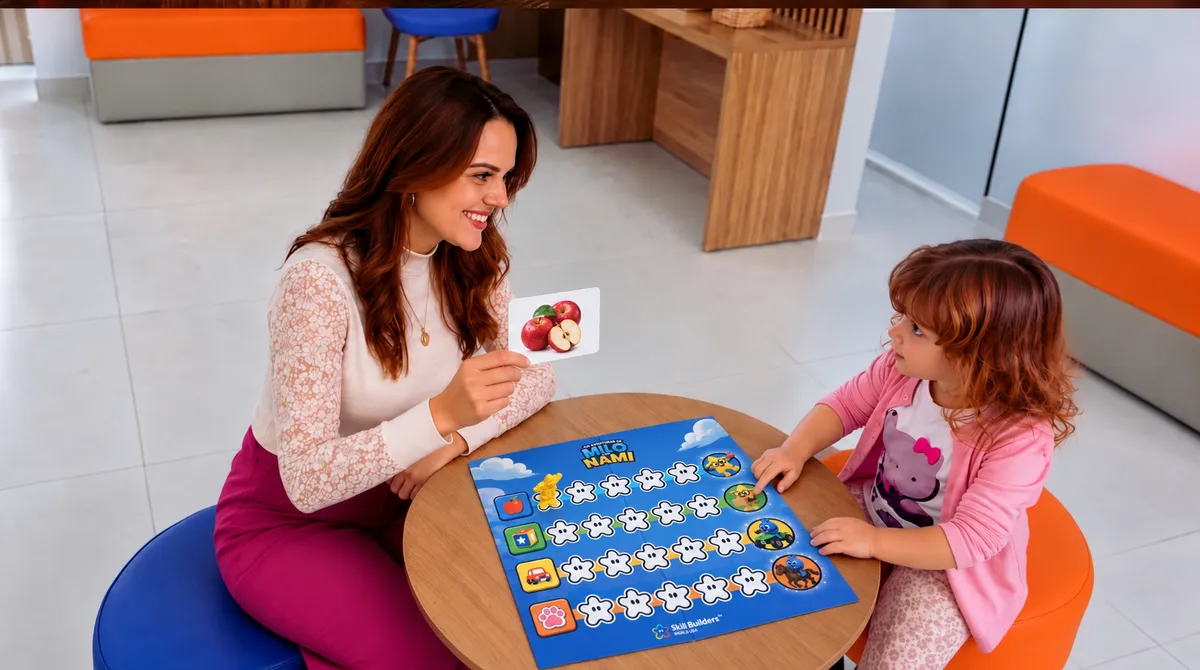
Angela in a session with a child, the Skill Buddies board on the table
Illustrative image

A game kids want to play, a step-by-step guide built on principles of Applied Behavior Analysis (ABA), and a journal to record every answer. Use it in session, then send it home.

Everything you'd otherwise build by hand, in one box

The game, the method, and the data, organized to work in your session and at the family's kitchen table.

The game: the child wants to play

Milo & Nami turn every trial into a move on the board. Each answer takes the characters one step forward, so you're not the only source of motivation in the room.

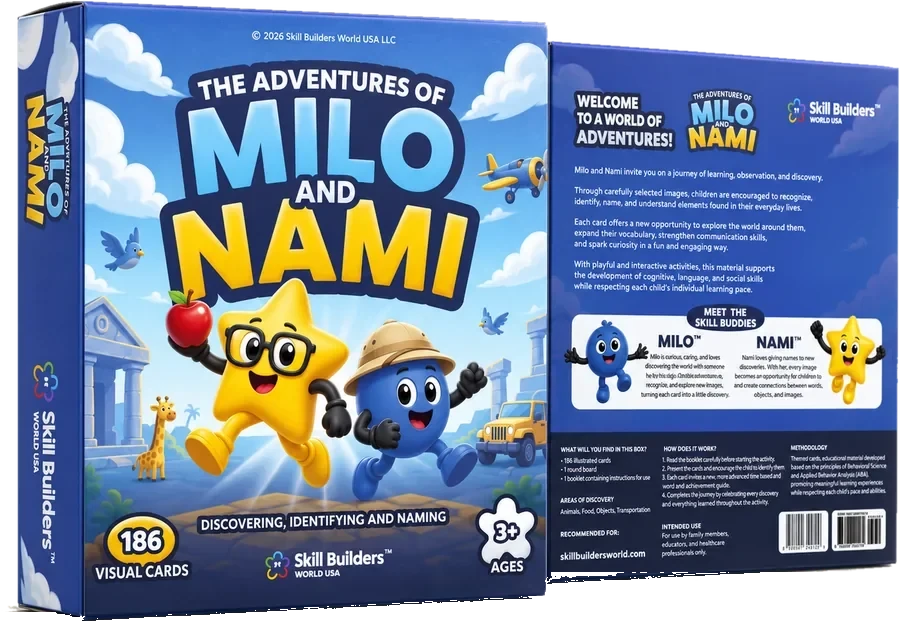
  • 186 picture cards in four categories, food, vehicles, objects, and animals, ordered by visual complexity
  • A game board and four character pieces, one for each player
  • Short games that keep it fresh: Milo's Mission, Nami's Mission, and the Duo Challenge
  • Every try is celebrated, with no penalty and no points lost on the board

The Adventure Guide: the method, step by step

The 40-page guide tells the adult what to say, how long to wait, and what to do with each answer, with a professional appendix written as session-ready programs.

  • Four prompt levels, from full physical to independent
  • Error correction in steps, so the child is helped without being given the answer
  • A mastery criterion you can adjust to each client's treatment plan, alongside the family's criterion of five independent responses on different days
  • Planned generalization: new people, places, materials, and real objects

The data: from baseline to the family's journal

You see where the child started and how many answers come without help, session by session and at home.

  • A baseline probe to record what the child already does independently before teaching begins
  • Codes for each prompt level, to record every trial
  • The Adventure Journal, where the family logs the words the child recognizes at home, so you open the next session knowing what happened there

Skills the child practices

Visual discrimination
recognizing a picture among similar ones
Following a simple instruction
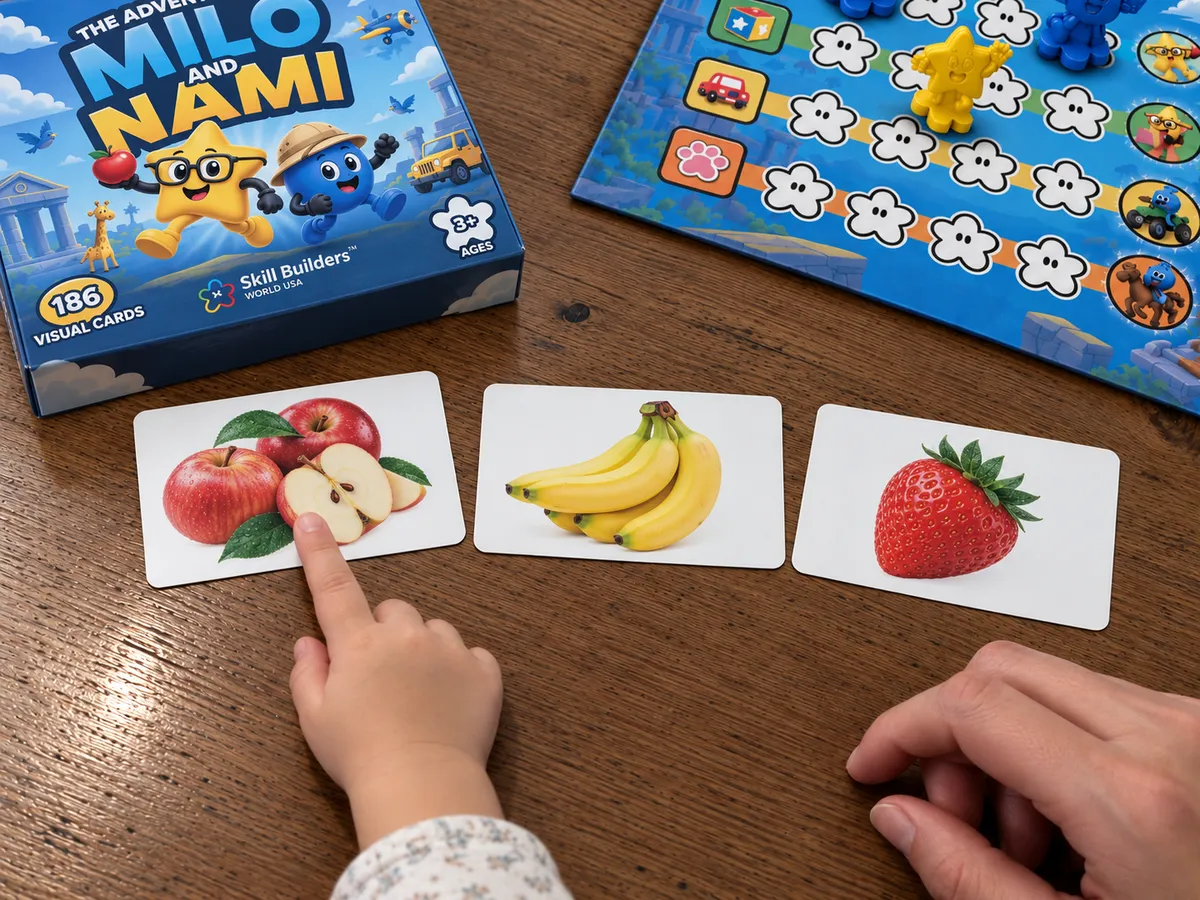
“Show me the apple”
Naming (tacting)
from pointing to saying the word
Features and functions
color, shape, and what things are for, in short games called Milo's Mission and Nami's Mission
Categorization
sorting cards into groups, in the Duo Challenge game
Any response form counts
looking, pointing, handing over a card, or saying the word

It fits the way you already work

A child's finger pointing to the apple among three picture cards, with the box and the game board behind
  1. In your sessions.

    Use the cards and prompt levels within your clients' treatment plans and the data collection you already use.

  2. As home practice.

    Send the family home with the same box and a clear starting point in the guide.

  3. Between sessions.

    The Adventure Journal and the board show you what happened at home, so the next session picks up where the family left off.

Built on principles of Applied Behavior Analysis

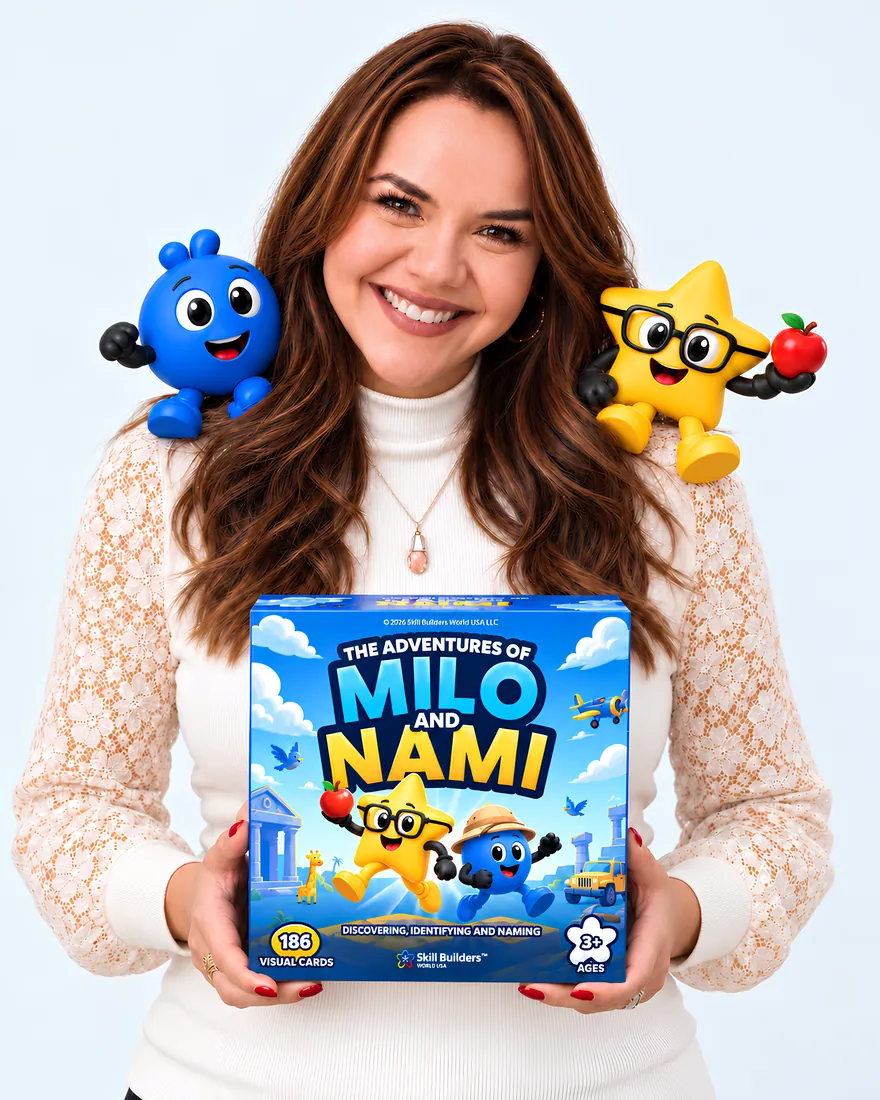
Angela Rodrigues smiling, with Milo and Nami on her shoulders and the box in her hands

The box is built on principles of Applied Behavior Analysis (ABA). Every activity breaks a skill into small steps. The principles behind Skill Buddies are widely studied. It's a play-based learning resource that doesn't replace professional services, and it isn't a standardized assessment.

Created by Angela Rodrigues, who ran two child development clinics in Brazil for more than a decade.

Questions professionals ask us

Can I run it inside my clients' treatment plans?

Yes. You set the targets; the box gives you the materials, the prompt levels, and a way to record every trial.

Can I use it with the data system I already have?

Yes. The prompt-level codes are simple to copy into the sheets or app you already use, and the family's journal gives you the home side.

How will families know what to do at home?

The guide is written for parents first. You won't need to write home instructions from scratch, because the guide already speaks their language.

Does it work for children who don't talk yet?

Yes. Looking, pointing, and handing over a card are valid responses from the very first activity, so the child can take part while their speech is still developing.

Do you offer options for clinics and schools?

Yes, we're putting together options for clinics, schools, and retailers. Write to global@skillbuildersworldusa.net and Angela's team will get back to you.

Be among the first professionals to use it

The first print run is in production. Join the professional waitlist to hear first, before the box is announced anywhere else.

The Adventures of Milo & Nami box, front and back